
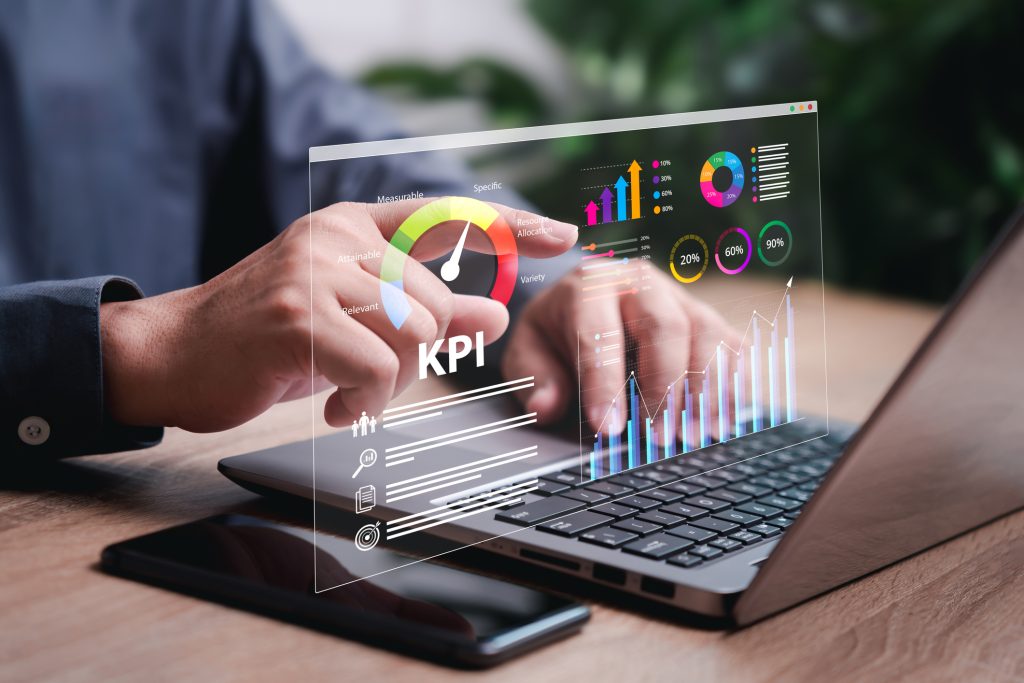
If you’re serious about building a profitable, sustainable business, tracking a few key financial metrics is non-negotiable. You don’t need to be a CFO-level numbers genius, but you do need to understand what the numbers are telling you — and what to do about them.
At Wilson Accounting, we help business owners in trades, fitness, and beauty industries (and beyond) get clear on their finances, improve cash flow, and scale with confidence.
Whether you’re working with a small business accountant, a business advisor, or even a Fractional CFO to drive smarter growth in your company, these are the metrics they should be helping you track and improve.
Net Profit Margin vs Gross Margin
First up: understanding the difference between your gross margin and your net profit margin.
Gross Margin tells you how efficiently you’re delivering your product or service. It’s calculated as:
(Revenue - Cost of Goods Sold) ÷ Revenue
It shows what percentage of your revenue is left after covering the direct costs of providing your goods or services. A healthy gross margin means you’re pricing your services well or managing costs effectively.
Net Profit Margin, on the other hand, looks at the big picture. It’s calculated as:
Net Profit ÷ Revenue
- A business with a strong gross margin but a weak net margin is likely overspending on operating costs.
- Tracking both tells you whether the issue is in your pricing/cost control or your overall spending habits.
Example: A construction business might have strong project margins, but if overhead costs like admin wages or office rent are too high, net profit gets squeezed. Working with a specialised accountant for tradesmen could help them spot these issues early.
Customer Acquisition Cost (CAC): Are You Paying Too Much?
Customer acquisition cost (CAC) is the average amount you spend to win a new customer. It’s calculated as:
Sales & Marketing Costs ÷ Number of New Customers
- Knowing your CAC tells you if your marketing and sales strategies are efficient.
- If CAC is too high compared to the lifetime value (LTV) of your customers, you’re throwing money away.
Example: A fitness studio spends $5,000 on Facebook ads and acquires 25 new members. Their CAC is $200 per customer. If each new member only pays $300 in total before cancelling, that’s not a sustainable model. Having a good business advisor or Fractional CFO in your corner can help you monitor CAC and guide smarter marketing investments.
Cash Flow, AKA The Lifeblood of Your Business
You’ve probably heard the saying: “Revenue is vanity, profit is sanity, cash flow is reality.”
Cash flow, particularly operating cash flow, measures the cash coming into and going out of your business from regular operations. It’s calculated as:
Cash Inflows from Operations - Cash Outflows from Operations
- Profit on paper doesn’t pay wages, suppliers, or the ATO. Cash flow does.
- Poor cash flow management is a leading cause of small business failures.
Example: A beauty clinic may be profitable according to the books, but it is struggling to stay afloat because suppliers require upfront payments. Tracking cash flow shows whether you can cover your bills day-to-day without dipping into reserves or overdrafts. Our business clients often get tailored cash flow advice to improve operations without feeling the pinch.
Working Capital and Current Ratio
Working capital measures the short-term health of your business. It’s calculated as:
Current Assets - Current Liabilities
Meanwhile, your current ratio is:
Current Assets ÷ Current Liabilities
- Positive working capital means you can cover your short-term debts and operational expenses.
- The current ratio gives you a quick check on liquidity. A ratio of 1 or more is often considered healthy.
Example: A tradie with $100,000 in current assets (including cash and invoices owed) and $70,000 in current liabilities (bills due) has a current ratio of about 1.43 — room for improvement, but pretty good. If your current ratio drops below 1.0, it’s a red flag that you’re at risk of a cash crunch. That’s where working with an outsourced CFO — someone who provides hands-on financial support and clear strategies to strengthen profitability — can make a real difference.
Why These Metrics Matter More Than Ever
Whether you’re running a busy construction company, a fast-growing fitness studio, or a boutique beauty clinic, knowing your numbers means better decisions and less financial stress.
Tracking just revenue and expenses isn’t enough anymore. To really know your business inside out, you need a clear view of:
- How much profit you make.
- How much it costs to win each new customer.
- Whether you have enough cash to pay your bills and invest in growth.
- How financially healthy your business is, short and long-term.
If you’re serious about growing your small business, teaming up with an accounting and business advisory team or even exploring Fractional CFO services could set you on the right path.
From our offices in Bundoora and Torquay, our business accountants in Melbourne help companies across Australia to build financial systems that support smarter decision-making. We’ll help you understand your numbers (not just report them), so you can scale your business confidently and sustainably.
Ready to get better control over your business finances? Book a free discovery call with Wilson Accounting today — your trusted partner for business advice and fractional CFO services.